
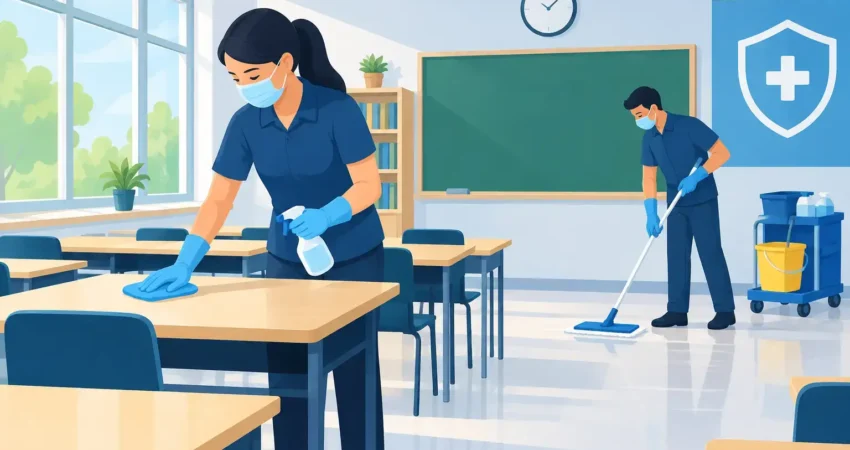
A classroom can look tidy at first glance and still carry the residue of a full school day: fingerprints on shared tables, germs on door handles, spills near lockers, and overflowing restroom bins. Effective school cleaning services address what students, teachers, families, and visitors can see, along with the high-touch and high-risk areas they may not notice.
For school administrators and facilities teams, cleaning is not simply a presentation task. It supports attendance, staff confidence, asset protection, and the ability to keep learning moving without unnecessary disruption. A dependable cleaning partner brings structure to that responsibility, with a schedule built around how the campus actually operates.
Why School Cleaning Services Need a Site-Specific Plan
No two schools have the same traffic patterns. An elementary school may need extra attention around lunch areas, restroom fixtures, and low-level surfaces. A high school may have busy locker rooms, science rooms, auditoriums, workshops, and sports facilities. Childcare and early learning settings often require frequent cleaning of shared toys, nap areas, and touchpoints.
A generic cleaning checklist can leave gaps. The better approach is to assess the school’s layout, student numbers, operating hours, events calendar, and the spaces that receive the heaviest use. That allows cleaning frequency to be matched to need rather than applying the same service level everywhere.
For example, a front office and entrance may need daily detail cleaning because they set the first impression for families and visitors. Restrooms may need service more than once a day, particularly in larger campuses. A library, staff room, or administration area may need routine cleaning but less frequent deep work. The goal is a clean, healthy environment without paying for unnecessary work in low-use areas.
What a Professional School Cleaning Program Should Cover
A reliable program combines routine cleaning with planned deeper services. Routine work keeps daily operations under control. Periodic deep cleaning prevents gradual buildup that can affect hygiene, appearance, and the life of flooring and fixtures.
Classrooms, offices, and shared learning areas
Desks, chairs, whiteboards, doors, light switches, and shared equipment collect constant contact throughout the day. Cleaning should include dust removal, vacuuming or floor care, waste removal, and targeted disinfection of high-touch points. In computer rooms and media spaces, cleaners should use appropriate methods around electronics rather than applying products carelessly.
Staff offices, reception desks, meeting rooms, and visitor spaces deserve the same consistent attention. These are often where parents, contractors, and community members form their impression of the school’s standards.
Restrooms and changing facilities
Restrooms are one of the clearest indicators of whether a school is being maintained properly. They require more than a quick wipe-down. Fixtures, partitions, floors, dispensers, bins, mirrors, and frequently touched surfaces need regular cleaning and replenishment of essential supplies.
The right frequency depends on enrollment and traffic. Schools with heavy restroom use may benefit from daytime checks as well as after-hours cleaning. This helps identify blocked dispensers, empty soap supplies, spills, and other issues before they become a concern for students or staff.
Cafeterias, lunchrooms, and break areas
Food-service spaces require close attention to tables, chairs, floors, bins, counters, and touchpoints. Crumbs and spills can quickly attract pests or create slip hazards, while food residue on shared surfaces creates an avoidable hygiene risk.
The cleaning scope should work alongside the school’s food-service procedures. A cleaning provider can maintain dining and common areas, while kitchen cleaning requirements may need to be coordinated with the food-service operator and the equipment in use. Clear responsibilities prevent important tasks from being assumed rather than completed.
Floors, carpets, and entrances
School floors take a significant amount of wear. Dirt carried in from playgrounds, fields, parking areas, and wet-weather entrances can damage finishes over time. Regular vacuuming, mopping, spot treatment, and entrance mat maintenance protect the appearance of the campus and help reduce slip risks.
Carpet cleaning and floor restoration should be scheduled around school breaks, weekends, or other quieter periods where possible. This is a practical trade-off: deep cleaning is more effective when spaces can be cleared, but the schedule must also respect events, summer programs, and staff access needs.
Gyms, locker rooms, and specialist spaces
Gyms and locker rooms face a different mix of moisture, odor, body contact, and heavy foot traffic. They need focused cleaning of benches, floors, fixtures, handles, and waste areas. Showers and changing rooms may require more frequent attention to help prevent buildup in damp conditions.
Specialist rooms should also be considered individually. Science labs, art rooms, workshops, and health rooms may have materials, surfaces, or safety procedures that require a tailored scope. A professional provider should confirm access requirements, approved products, and any areas that need staff oversight.
Building a Cleaning Schedule That Works Around School Life
The best cleaning schedule is visible in its results, not in the disruption it creates. Many schools need core cleaning completed after students leave, with selected daytime service for restrooms, entrances, spills, and urgent needs. Others may need early-morning coverage, weekend cleaning, or additional support before open houses, sports events, performances, and parent conferences.
A practical service plan should define what happens daily, weekly, monthly, and seasonally. Daily work usually addresses hygiene, waste, floors, and touchpoints. Weekly or monthly tasks can include detailed dusting, interior glass, baseboards, high ledges, and more thorough restroom care. School breaks are often the best time for carpet extraction, window cleaning, hard-floor care, and detailed deep cleaning.
Communication matters just as much as the schedule. The school should have a clear point of contact, a simple process for reporting concerns, and confidence that urgent issues will be handled promptly. If a restroom leak, illness-related cleanup, or event spill occurs, facilities staff should not have to chase multiple people for an answer.
Choosing a School Cleaning Partner
Price matters, but the lowest quote is not always the lowest operational cost. Missed visits, inconsistent staff, unclear scope, or unsuitable cleaning methods can create complaints and leave the facilities team carrying the burden.
When reviewing school cleaning services, look for a provider that can explain how it will manage site access, background screening where required, staff training, quality checks, and safe chemical use. Ask how the provider handles substitutions when a regular cleaner is unavailable and how concerns are documented and resolved.
A capable provider should also be comfortable adjusting the program as the school’s needs change. Enrollment, construction work, weather, community events, and illness seasons can all affect cleaning demand. Flexibility is valuable, but it should come with clear pricing and agreed expectations rather than last-minute surprises.
A Cleaner Campus Supports Confidence Every Day
Students should be able to focus on learning, teachers should be able to start the day in prepared rooms, and families should feel reassured when they walk through the door. Those outcomes depend on consistent work completed by people who understand the responsibility behind educational facility cleaning.
Hire and Clean works with facilities that need dependable cleaning, practical scheduling, and a service standard built around hygiene and presentation. Whether a school needs recurring after-hours cleaning, seasonal deep cleaning, carpet care, window cleaning, or support for a one-time event, the starting point is a clear site assessment and a plan that fits the campus.
A clean school does not happen by chance. It comes from regular attention, accountable service, and a cleaning schedule that gives every student and staff member a safer, more welcoming place to spend the day.