A property can look spotless and still have methamphetamine residue on walls, ceilings, carpets, ventilation surfaces, and other high-touch areas. There is no reliable visual check, smell, or household cleaning method that can confirm whether a space is safe. Knowing how to test meth contamination starts with recognizing the limits of informal checks and arranging the right level of professional assessment.
For landlords, property owners, tenants, and facilities managers, prompt testing protects people first. It also gives you documented evidence to support decisions about occupancy, remediation, insurance, tenancy matters, and property value. The right process depends on the property’s history, the reason for concern, and whether you need an initial indication or a defensible laboratory result.
When should you test for meth contamination?
Testing is sensible whenever there is a credible reason to suspect meth use or manufacture in a property. That may include information from a previous tenant, police attendance, unusual activity reported by neighbors, an unexplained chemical odor, discarded drug-related items, or a property that has been vacant or poorly maintained.
Testing is also commonly arranged before buying a home, after taking possession of a rental, before re-letting a property, or following a suspected contamination event in a commercial premises. A change in ownership or tenancy does not remove the risk. Residue can remain on interior surfaces long after the people responsible have left.
Avoid treating signs alone as proof. Staining, damaged walls, unusual ventilation alterations, or chemical containers may justify urgent professional advice, but they do not establish a contamination level. Equally, an apparently clean property should not be assumed clear if there is a credible history or concern.
How to test meth contamination: screening versus laboratory testing
There are two broad approaches: preliminary screening and professional sampling with laboratory analysis. They serve different purposes.
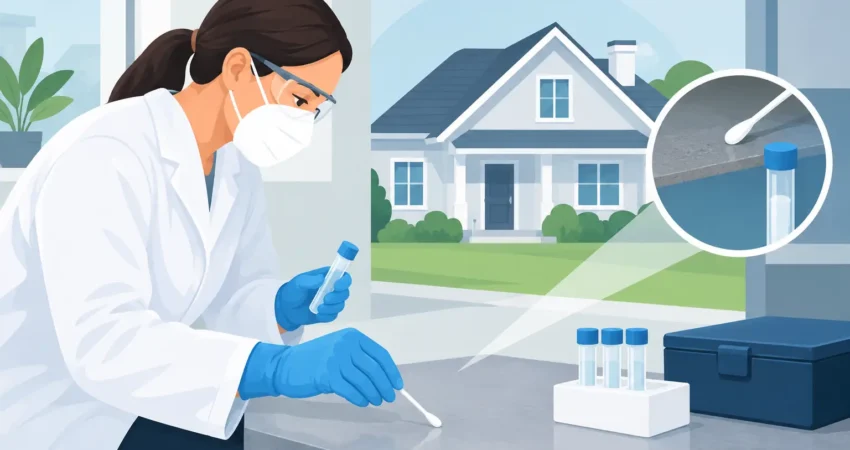
A field screening test can provide a fast indication that methamphetamine residue may be present on a surface. These tests are often used as an early decision-making tool, particularly when an owner needs to know whether further investigation is warranted. Results may help identify areas that need targeted sampling.
However, a screening result is not the same as a formal contamination assessment. It can be affected by the location sampled, surface condition, collection technique, and the limitations of the test itself. A negative screening result may not rule out contamination elsewhere, while a positive result needs confirmation and interpretation.
Laboratory testing is the more reliable option when you need measured results, clear documentation, and advice on what happens next. A trained technician takes samples using a defined method, records the sampling locations and chain of custody, and sends the samples to an appropriate laboratory. The report should identify the substance tested for, the locations sampled, the measured result, and the relevant standard or decision criteria used to interpret it.
For a property that may require remediation, a professional initial assessment is usually the right starting point. It establishes the scope of the issue rather than leaving you to make high-stakes decisions from a single wipe test.
Why sample location matters
Meth residue is not always evenly spread through a building. Contamination can vary between rooms and even between surfaces within the same room. Areas where people spent time, surfaces that are regularly touched, bedrooms, living spaces, bathrooms, and ventilation-related areas may all require consideration.
A qualified assessor develops a sampling plan suited to the property. That plan should account for the building layout, reported activity, visible condition, likely use areas, and the purpose of the assessment. Testing one convenient surface near the entry is rarely enough to represent an entire home, unit, office, or commercial facility.
What to do before testing
If you suspect recent meth use or production, do not begin a deep clean before receiving professional advice. Washing walls, shampooing carpets, repainting, or using strong chemicals can spread residues, interfere with sampling, or create the appearance of a resolved problem without addressing the underlying contamination.
Keep people away from any area that appears unsafe, especially children, pregnant people, and anyone with respiratory sensitivities. If you find potentially hazardous materials, damaged chemical containers, or evidence of a suspected clandestine laboratory, leave the area and contact emergency services or the appropriate local authority. Do not handle, move, or dispose of the materials yourself.
For a suspected residue issue without an immediate hazard, document what you know. Record the property address, dates, tenancy or ownership history, reported incidents, photographs of relevant conditions, and any previous cleaning or testing records. This information helps the assessor plan the inspection and may be useful for insurers or property managers.
Choosing a qualified meth testing provider
The quality of the result depends heavily on the quality of the assessment. Look for a provider that can explain its sampling approach in plain language and provide written reporting rather than a verbal opinion alone. They should be clear about whether they perform screening, laboratory sampling, remediation, post-remediation verification, or all of these services.
Ask how samples are collected, where they will be analyzed, and what standard or guideline will be applied. In New Zealand, methamphetamine assessment and decontamination work is commonly considered in relation to NZS 8510:2017, alongside the specific circumstances of the property and current professional guidance. Requirements may differ by location, insurer, lender, or contract, so a provider should not promise a one-size-fits-all answer.
It is also reasonable to ask whether the assessor is independent from the remediation contractor. An independent assessment can offer additional confidence in some situations. On the other hand, a specialist provider that manages assessment, cleanup, and verification can reduce delays when urgent action is needed. The key is transparent scope, documented results, and verification that the property is suitable for reoccupation after work is complete.
Understanding your test report
A useful report does more than state “positive” or “negative.” It should show where samples were collected and why those locations were chosen. It should also state the result for each sample and explain what those results mean in relation to the assessment criteria.
If results indicate contamination, do not assume that repainting or ordinary cleaning will solve it. Effective meth decontamination can require detailed cleaning of hard surfaces, treatment or removal of soft furnishings and porous materials, HVAC and ventilation attention, waste handling, and careful control of cross-contamination. The required scope depends on contamination levels, building materials, and how widely residue has traveled.
After remediation, post-cleaning verification is essential. A clearance assessment confirms whether the completed work has achieved the required outcome. Without it, an owner may have paid for cleaning but still lack evidence that the property is ready for tenants, staff, customers, or family members.
Can you use a DIY meth test kit?
A DIY kit may be useful as a limited preliminary screen, but it should not be the sole basis for declaring a property safe or directing major remediation work. Collection errors are easy to make. Sampling too small an area, choosing unrepresentative surfaces, contaminating the swab, or misunderstanding the result can lead to false reassurance or unnecessary alarm.
DIY results can also create difficult decisions for a landlord or buyer. If the result is positive, you still need professional confirmation and a documented plan. If it is negative, you may still need further testing when the property history suggests a wider risk.
For that reason, treat an at-home kit as a prompt to seek professional advice, not a substitute for a formal assessment. The cost of proper testing is usually small compared with an unmanaged contamination issue, a delayed sale, an uninhabitable rental, or potential harm to occupants.
Protect the property and the people in it
Meth contamination testing is not about assigning blame or reacting to rumors. It is about replacing uncertainty with evidence and taking proportionate action. A clear test report allows property decision-makers to move forward with confidence, whether that means no further action, targeted remediation, or a full restoration plan.
Hire and Clean can help property owners arrange a practical path from assessment through compliant decontamination and post-remediation verification. Take the first step early: preserve the property’s condition, obtain professional testing, and make decisions based on documented results rather than guesswork.