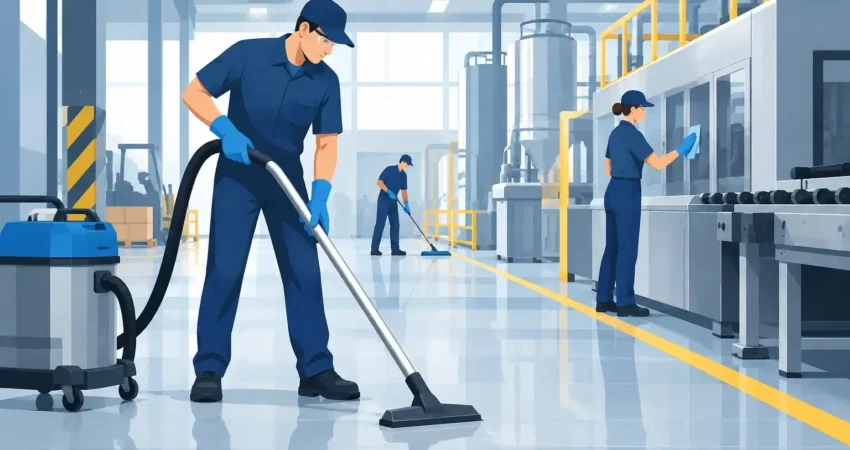
A production floor can look clean while still creating real operational risk. Fine dust settles inside equipment housings, oils build up near walkways, residue affects product quality, and neglected high-touch areas can spread contamination across shifts. Industrial cleaning services address the work that routine janitorial cleaning is not designed to handle, helping facilities protect people, assets, and daily output.
For facility managers, operations leaders, and property owners, the goal is not simply a better-looking site. The right cleaning program supports safer movement through the workplace, reduces preventable downtime, protects expensive machinery, and gives staff confidence that their environment is being maintained properly.
What Industrial Cleaning Services Should Cover
Industrial environments are not all alike. A warehouse with forklift traffic has different risks from a food-processing site, manufacturing plant, workshop, distribution center, or construction facility. Cleaning plans should reflect the building’s layout, the materials handled there, shift patterns, equipment sensitivity, and the standards the business must meet.
A dependable service generally begins with an on-site assessment. This identifies the areas where dirt, dust, oils, chemical residue, packaging waste, or moisture create the greatest concern. It also establishes what can be cleaned during normal operations and what requires a shutdown window, controlled access, or coordination with site personnel.
Common industrial cleaning work includes floor scrubbing and degreasing, high-dust removal, washroom and breakroom sanitation, waste handling, warehouse cleaning, machinery exterior cleaning, loading-dock cleaning, and detailed cleaning after maintenance or construction work. Some sites may also require pressure washing, ventilation-area cleaning, carpet care in offices, or periodic window cleaning.
The most useful scope is practical rather than one-size-fits-all. Daily attention may be needed around entrances, restrooms, staff facilities, and busy production zones, while high-level dusting or deep floor treatment may be scheduled monthly or quarterly. The right frequency depends on the work being done, not on a generic checklist.
Why Cleaning Affects Safety and Uptime
In an industrial setting, poor housekeeping can become a safety issue quickly. Dust, loose debris, liquid spills, and greasy floors increase slip and trip hazards. Blocked walkways and cluttered work areas make it harder for people to move safely, respond to incidents, or access emergency equipment.
Cleaning also protects equipment. Airborne dust and fine particles can find their way into moving components, electrical cabinets, and ventilation systems. Grease and residue can make inspections harder, conceal leaks, and contribute to premature wear. Professional cleaners do not replace maintenance technicians, but they can make maintenance work more effective by keeping surrounding areas accessible and free from buildup.
There is a business case as well. A neglected facility can lead to more frequent interruptions, lower staff morale, and a weaker impression on customers, auditors, contractors, or prospective employees. By contrast, a clean, well-managed workplace signals that the business takes its people and operations seriously.
That said, cleaning alone cannot solve every safety or production issue. If there is an active leak, damaged flooring, mold growth, chemical spill, or hazardous contamination, the source must be addressed first. A professional cleaning provider should flag concerns clearly, work within agreed safety procedures, and recommend specialist support when the job falls outside standard cleaning scope.
The Difference Between Routine and Specialist Cleaning
Routine cleaning keeps shared areas presentable and hygienic. It may include restroom servicing, trash removal, vacuuming, mopping, and disinfecting touchpoints. These tasks remain valuable in industrial buildings, especially where office staff, visitors, and shift teams share facilities.
Specialist industrial cleaning goes further. It involves larger spaces, heavier soil loads, specialized machinery, and work practices designed for higher-risk environments. The team may need site induction, personal protective equipment, restricted-area clearance, equipment training, and a schedule that fits around production demands.
For example, a warehouse may need regular floor cleaning to manage dust and tire marks, plus periodic deep cleans around racking, docks, and hard-to-reach edges. A manufacturing facility may need focused degreasing near machinery and a careful approach to dust around sensitive equipment. A post-construction industrial site may need detailed removal of building dust and debris before it is ready for staff or operations.
This is why the lowest price is not always the lowest cost. A provider that underestimates labor, uses unsuitable chemicals, or cleans without understanding site controls can create disruption rather than reduce it. Value comes from a scope that is realistic, a team that arrives prepared, and work that is completed to a consistent standard.
How to Build a Cleaning Plan That Works
Start with the parts of the facility that create the greatest risk or operational pressure. These are often main walkways, loading zones, production-adjacent areas, staff amenities, entry points, and places where dust or residue accumulates rapidly. Then determine which tasks need daily, weekly, monthly, or project-based attention.
It helps to define responsibilities before work begins. Site managers should explain access restrictions, hazardous areas, emergency procedures, and any equipment that must not be touched. The cleaning provider should identify the methods, products, staffing, and estimated timing required for each task. Clear communication prevents cleaning crews from interrupting critical workflows or entering areas at the wrong time.
Scheduling deserves careful thought. Cleaning during operating hours may be suitable for low-disruption tasks such as restrooms, breakrooms, and office spaces. Heavy floor cleaning, high-access work, pressure washing, or detailed production-area cleaning may be better completed after hours, between shifts, or during planned downtime. There is no single right answer, but the plan should prioritize safety and continuity.
Documentation can also make a difference. For recurring work, a simple service schedule and inspection process helps ensure tasks are not missed. If a facility has compliance requirements or multiple decision-makers, records of completed services, issues found, and recommended follow-up work provide useful accountability.
Questions to Ask Before Choosing a Provider
Before booking, ask whether the provider has experience with facilities similar to yours and whether they can adapt the scope as conditions change. Confirm how they manage health and safety, what equipment and products they use, and whether they can work around your operating schedule.
It is also worth asking how quality will be checked. A reliable provider should be comfortable discussing service expectations, reporting concerns, and correcting issues promptly. If you are requesting a quote, provide as much detail as possible about square footage, access, operating hours, floor types, equipment areas, and the reason for the service. Better information leads to a more accurate estimate and fewer surprises on the day.
When a One-Time Clean Is the Right Choice
Not every facility needs a full recurring contract immediately. A one-time industrial clean can be the sensible first step after construction, a machinery move, a tenant change, a busy seasonal period, or a long gap in maintenance. It can reset the site and reveal which areas need ongoing attention.
Recurring service is usually more effective where dust, traffic, waste, or spills build up quickly. Regular visits keep the workload manageable and can reduce the need for disruptive catch-up cleaning later. Many businesses use a combination: scheduled routine cleaning supported by periodic deep cleaning for floors, high areas, and hard-to-reach zones.
Hire and Clean works with commercial and industrial clients who need practical schedules, clear estimates, and cleaning standards that support safe, presentable workplaces. Whether the need is a one-time project or ongoing site care, the best plan starts with an honest assessment of the facility and its risks.
A cleaner industrial facility is easier to inspect, safer to work in, and better prepared for whatever the next shift brings. Take the first step by identifying the areas that place the most pressure on your team, then build a cleaning schedule around the way your operation actually runs.